What Should I Do Before Assuming My Rolex Is a Windfall?
Owning a Rolex can feel like holding a tangible piece of luxury, history, and craftsmanship. But when you glance at its polished case or glance at recent headlines touting skyrocketing secondary market values, it’s natural to wonder: Is my Rolex worth a windfall? Before you envision a sudden payday, it’s crucial to approach the question with a clear understanding of how the watch market operates, what drives value beyond the original Manufacturer’s Suggested Retail Price (MSRP), and how real-world pricing compares to the hype.
Understanding MSRP vs. Rolex Resale Price
First, let’s address a common confusion. The replacement value—often tied to MSRP or insurance appraisals—is not the same as the resale value. MSRP is the retail sticker price established by Rolex and its authorized dealers. It represents what you’d pay for a brand-new watch in-store with a warranty.
Resale value, however, is the price a willing buyer will pay a willing seller in today’s secondary market. This can be significantly influenced by factors such as supply, demand, and market perceptions. For many Rolex models, especially popular sport references, the resale price can exceed MSRP due to scarcity and collector interest; for others, resale may be below MSRP, especially if the watch is mass-produced or less in demand.
Why Does Scarcity Matter?
Scarcity is often the main driver pushing the Rolex resale price beyond MSRP. When Rolex discontinues a model—be it a Daytona, Submariner, or GMT-Master II—those watches become finite in number. As existing units are bought and sold, collectors often chase these “end of era” models, increasing demand. Secondary market prices reflect this dynamic.
Example: When Rolex discontinued the ceramic bezel Daytona reference 116520 in 2016, its resale prices began climbing steadily, benefiting from scarcity and collector demand. But not all discontinued models follow the same trajectory—rarity alone doesn’t guarantee premium pricing.
Collector Demand Cycles and Market Timing
Rolex resale price is also subject to the natural ebb and flow of collector demand. Watches beloved in one era can see their market cool off or heat up unpredictably. Trends, pop culture influences, and changing tastes create cycles that impact watch values.
For example, the hype around vintage Rolex models such as the Paul Newman Daytona or early GMT-Masters has been strong for years, but less-celebrated references may not see such consistent price growth.
Quick Reality-Check: What Did It Actually Sell For Last Week?
When considering your watch’s value, ask yourself, “ What did my model actually sell for last week?” This question helps weed out inflated appraisals based on hype. Recent sales data offers a realistic window into current market conditions rather than wishful thinking.
Using Auction Results and Dealer Sales for Precise Watch Market Comps
To accurately gauge your Rolex’s resale value, start with transaction comparables—or “comps”—from trusted sources. Two reliable tools for this are auction results and dealer sales data:
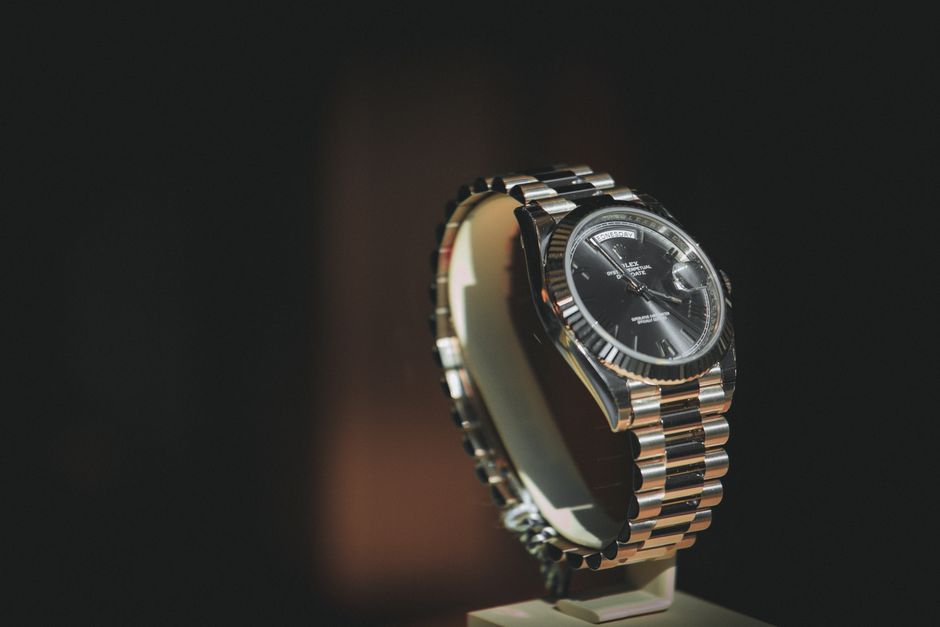
- Auction Results: Auction houses like Phillips, Christie’s, and Sotheby’s often publish detailed records of their Rolex sales, including final hammer prices. These sales reflect true buyer activity and can highlight exceptional examples that set market benchmarks.
- Dealer Sales: Reputable pre-owned watch dealers such as Diamond Banc are active participants in the secondary market. They provide real-time pricing based on current inventory movement and demand, offering a grounded estimate of what buyers are paying today.
By consulting both auction results and dealer sales, you create a triangulated set of data points that reveal a more accurate picture than any single appraisal or estimate could provide.

Common Pitfall: Confusing Rolex Appraisal vs. Resale Value
Many people confuse a Rolex appraisal—often conducted for insurance purposes—with the watch’s true resale price. An appraisal typically assigns a replacement value or “retail replacement cost,” which insurance companies use to determine coverage limits. This figure is frequently set at or near MSRP (sometimes slightly higher to cover dealer markups or taxes).
Important: An appraisal is not a market price. When selling, expect your Rolex’s resale value to depend on recent comps, condition, demand, and the speed of sale, which usually means a price below the insurance appraisal.
Step-By-Step Checklist: What to Do Before Assuming Your Rolex Is a Windfall
https://marketrealist.com/retail-and-wholesale/why-some-discontinued-rolex-watches-are-now-worth-more-than-they-cost-new/- Identify your exact model and reference number. Verify whether your Rolex is current production, discontinued, or vintage.
- Check recent auction results. Look up your model on auction house archives to see realized sale prices in the last 6–12 months.
- Research dealer prices. Scan listings from trusted secondary market dealers like Diamond Banc for current asking prices and sold listings.
- Understand collector demand cycles. Consult market outlooks and commentary from watch market experts such as Market Realist.
- Keep condition in mind. Rolex resale prices favor watches with original parts, minimal wear, and full accessories (box, papers).
- Beware of over-optimistic appraisals. An insurance appraisal is a replacement cost—not a guaranteed sale price.
- Ask yourself the reality-check question: “What did it actually sell for recently?” This grounds your expectations in factual sales history.
Summary Table: Key Differences Between Rolex Replacement Value and Resale Price
Aspect Replacement Value (Appraisal/MSRP) Resale Value (Secondary Market) Definition Cost to replace with a new watch at retail Price a buyer pays in a private, dealer, or auction sale Typical Source Authorized dealers, insurance appraisals Auction records, secondary market dealers (e.g., Diamond Banc) Influencing Factors Rolex list prices, taxes, warranty Scarcity, demand cycles, condition, market comps Volatility Stable, changes slowly Can fluctuate quickly based on market trends Typical Relationship Usually a fixed number or incremental changes May be below or above MSRP depending on model and timingFinal Thoughts
While it’s tempting to assume your Rolex is an instant windfall, the reality demands a careful, informed approach. Use reliable market comps—via auction results and dealer sales—to understand real-world rolex resale price trends. Distinguish between an insurance appraisal’s replacement value and actual resale expectations. Factor in scarcity driven by discontinuation and the natural ups and downs of collector demand cycles.
By grounding your expectations in data and market realities—from trusted sources like Diamond Banc and insights from Market Realist—you’ll navigate your Rolex’s value with clarity and avoid common pitfalls that can lead to disappointment.
Remember: the true question isn’t what the watch could be worth one day, but what it actually sells for today.